Non Zero Space
Reimagining Learning Through Inner Ecology & Outer Ecology
The Non-Zero Education Space is BeComing Earth Foundation's place-based learning initiative that nurtures a new generation of ecological thinkers, community leaders, and lifelong learners. it moves beyond conventional environmental education by bringing together inner transformation, ecological understanding, local knowledge, and lived experience into one continuous learning journey.
Contact usNon Zero Exploration
It is epistemic justice: communities as co-producers of knowledge, not its subjects.
The structure
Non-Zero Space
Research, learning and the intellectual commons
Holds → programme
Non-Zero Learning Space
A living, collectively owned commons of place-based ecological knowledge.
First prototyped as
The Forest School learning space
Pilot, run with The Circle Grant 2026 and measured.
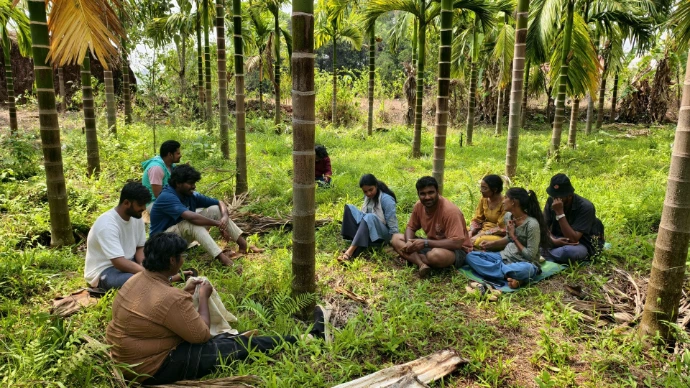
We believe that lasting environmental change begins with the way people understand themselves, their communities, and the landscapes they inhabit. Rather than treating education as the transfer of information, Non-Zero creates spaces where children, youth, educators, elders, researchers, and communities learn with one another and learn from forest, elephant, bird, ant & more. Every forest walk, community dialogue, cultural celebration, research project, and shared meal becomes an opportunity to deepen our relationship with the more-than-human world.
where our team reflected on the limitations of conventional conservation education and developed an alternative model rooted in experiential learning, intergenerational dialogue, and knowledge justice. Instead of asking "How do we teach conservation?" we ask "How do we cultivate people who naturally live in coexistence?"
Journey
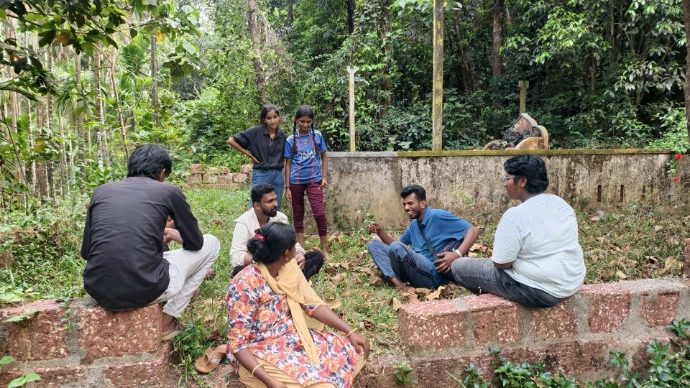
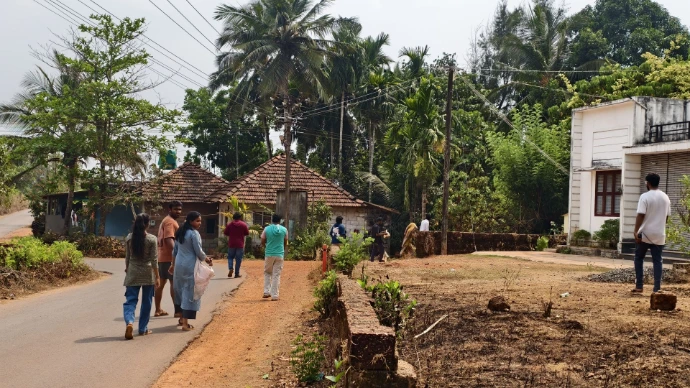
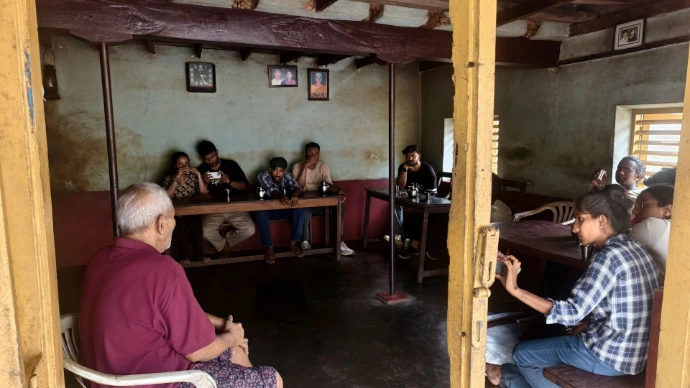
Community and Learning
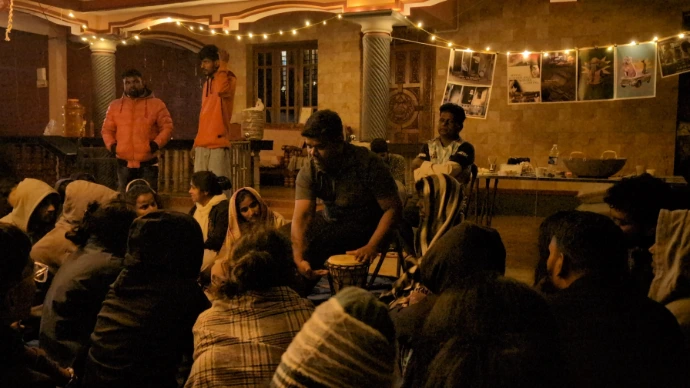
Our Learning Philosophy
Non-Zero is built on the understanding that ecological wisdom already exists within landscapes and communities. Farmers, Indigenous peoples, elders, artisans, children, and local practitioners all hold knowledge that deserves equal space alongside scientific research. The programme creates opportunities for these different ways of knowing to meet, challenge, and strengthen one another.
Learning is organised around two interconnected dimensions:
Inner Ecology
- Identity, belonging, empathy, and emotional well-being
- Reflection, storytelling, art, and dialogue
- Relationships between self, community, and the more-than-human world
- Building values that support coexistence and collective care
Outer Ecology
- Forest ecosystems, biodiversity, wildlife, and watersheds
- Climate, agriculture, and sustainable livelihoods
- Indigenous and place-based ecological knowledge
- Observation, field research, mapping, and ecological restoration
- Understanding coexistence through lived experience rather than theory
How We Learn
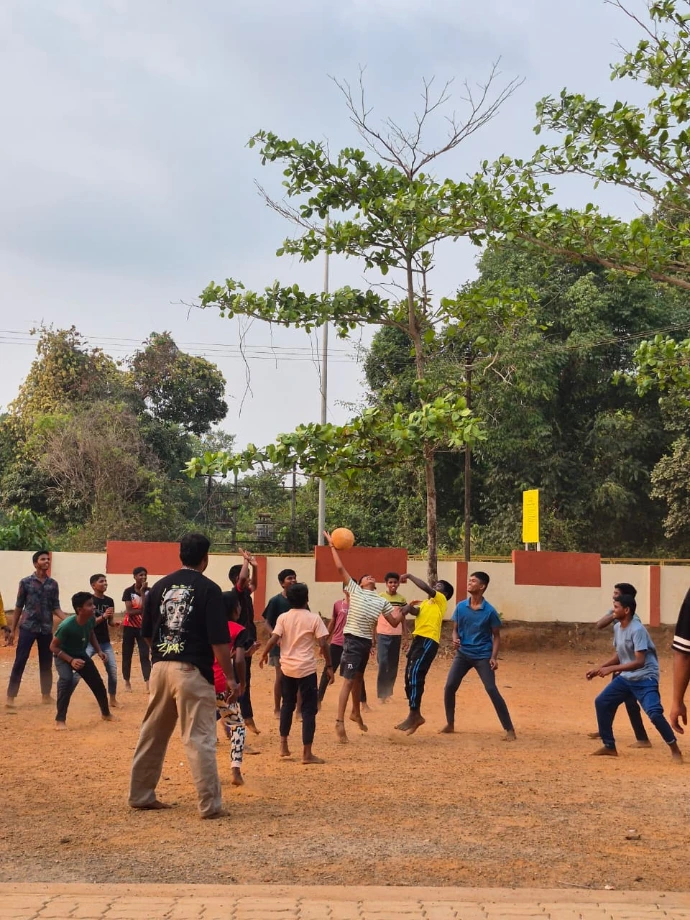
The Non-Zero Education Space is not confined to classrooms. Learning happens wherever people and nature meet.
Our learning experiences include:
- Forest walks and ecological explorations
- Community dialogues and intergenerational learning circles
- Citizen science and place-based research
- Arts, culture, storytelling, and indigenous knowledge
- Youth leadership programmes
- Workshops and learning journeys
- Seasonal festivals and immersive ecological experiences
- Action projects designed and led by learners
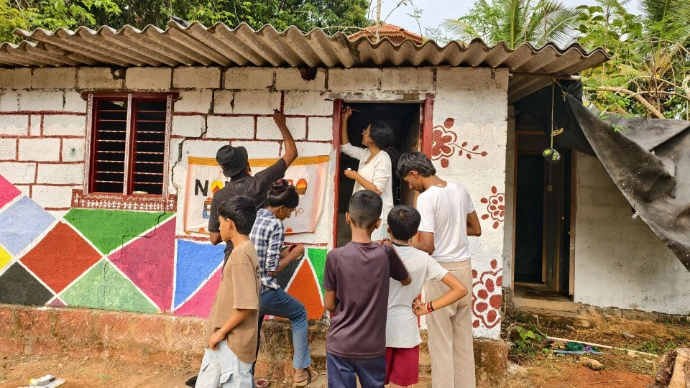
Every programme is co-created with local communities
A Living Knowledge Commons
Beyond being an education programme, Non-Zero is also BCEF's living knowledge commons a shared space where research, community knowledge, learning resources, field experiences, and organisational memory are continuously created, documented, and made accessible for all. Instead of knowledge belonging to individuals or institutions, it becomes a collective resource that grows with every conversation, every field visit, and every community partnership.
Our Vision
We envision a future where young people do not simply learn about nature, they learn from nature, with communities, and through lived experience. By reconnecting people with place, culture, and ecological systems, the Non-Zero Education Space seeks to nurture compassionate citizens who can lead the transition toward more just, resilient, and regenerative communities.
Conservation is not built only by protecting forests. It is built by growing people who understand how to belong to them.