IMPLEMENTATION
Turning ideas into place-based action.
Through community participation, local governance engagement, coexistence initiatives, and place-based conservation, ecological efforts, we work alongside communities and institutions to address ecological challenges rooted in specific landscapes.
Implementation is where relationships become action.
The system
Implementation
Direct ecological action, carried out place by place with the people who live there.
Holds → programmes
Holds → programmes
A programme
A long-term commitment to a whole region and the relationships inside it.
Which hold → projects
A project
A focused effort within a programme, built around one challenge, with one community.
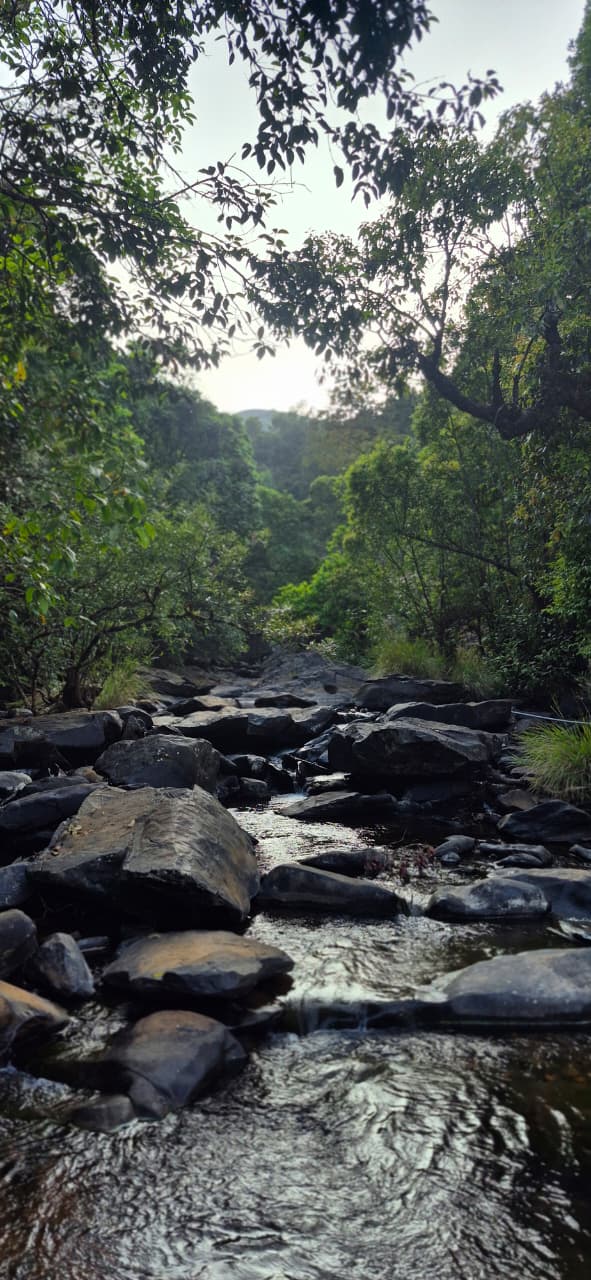
Voice of the Western Ghats
"ನಾಡ ಮಕ್ಕಳಾ ನಾವು, ಕಾಡು ಮಕ್ಕಳು ನಾವು."
A programme for restoration, conservation, participation, advocacy, environmental learning and community engagement across the Western Ghats. Supporting the conversations, leadership, storytelling and action emerging from the region itself so the people who live in the Ghats set the terms of how it is cared for.
Project P.E.A.C.E.
People–Elephant Action for Coexistence & Ecology
Project P.E.A.C.E. (People–Elephant Action for Coexistence & Ecology) is a flagship initiative under Voice of the Western Ghats, the implementation programme of BeComing Earth Foundation. The project was conceptualised and developed through the Changeloom Fellowship (ComMutiny) between 2025 and 2026, where the team worked with mentors, community leaders, researchers, and local institutions to rethink how human–elephant interactions are understood and addressed.
Across the Western Ghats, communities living near forests experience frequent encounters with elephants that affect livelihoods, safety, and the well-being of both people and wildlife. Conventional responses often focus only on emergency deterrence or physical barriers. Project P.E.A.C.E. takes a different approach by recognising that coexistence requires long-term relationships, local knowledge, community leadership, and collaborative governance.
Rather than treating communities as beneficiaries, the project positions them as knowledge holders, co-designers, and decision-makers. Working alongside farmers, Indigenous communities, Panchayats, the Karnataka Forest Department, researchers, youth groups, and civil society organisations, the project creates platforms where diverse perspectives come together to design place-based coexistence strategies.
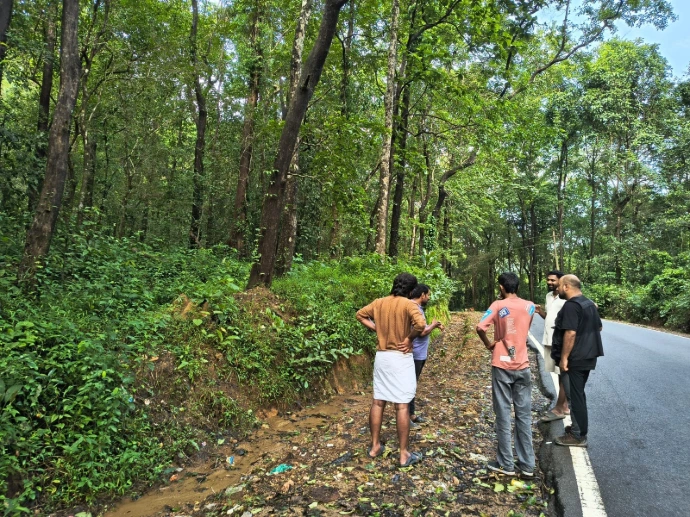
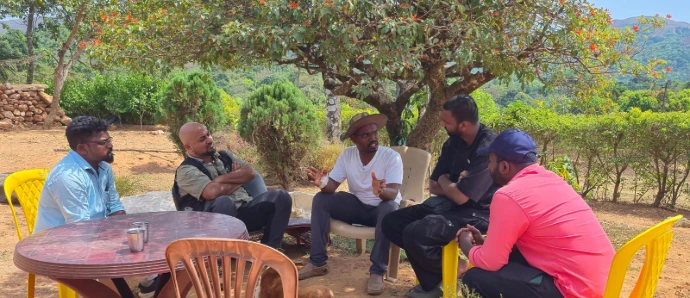
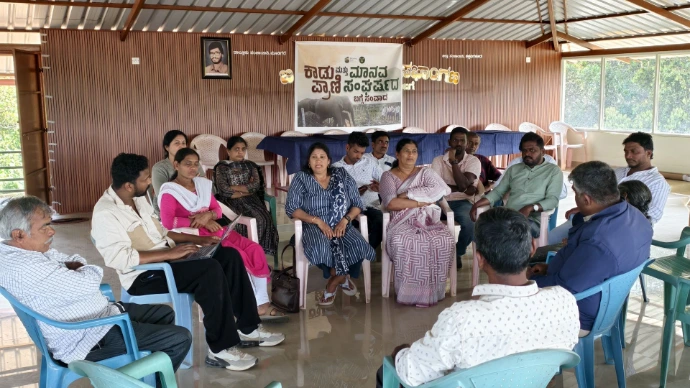
Our Approach
Project P.E.A.C.E. combines research, community engagement, cultural practices, and technology to build practical coexistence models that are rooted in local landscapes. Key areas of work include:
- Community Dialogues: Facilitating structured conversations between communities, Panchayats, Forest Department officials, researchers, and local leaders to build trust and collective action.
- People's Reports: Documenting community experiences, traditional knowledge, and recommendations to inform policy and decision-making.
- Conflict Mapping: Identifying and analysing human–elephant interaction hotspots to develop location-specific interventions instead of one-size-fits-all solutions.
- Research & Innovation: Exploring behavioural ecology, ethical deterrence methods, and community-based monitoring systems.
- Technology for Communities: Developing open, community-friendly reporting systems to improve real-time documentation of wildlife interactions.
- Youth & Ecological Learning: Connecting the project with the Non-Zero Education Space, enabling young people to understand coexistence through lived experiences, ecological learning, and intergenerational knowledge exchange.
Towards a Model Panchayat for Coexistence
One of the long-term ambitions of Project P.E.A.C.E. is to develop a Model Panchayat for Coexistence—a community-led framework where local governance institutions, residents, and conservation stakeholders collectively design systems that reduce risks for both people and elephants while strengthening ecological resilience. The learning from this model aims to create an adaptable framework that can be replicated across other human–elephant landscapes in the Western Ghats.
Why P.E.A.C.E.?
For us, coexistence is not simply about reducing conflict. It is about restoring relationships between people, wildlife, forests, and the institutions that shape these landscapes. By combining local wisdom, scientific research, participatory governance, and continuous community engagement, Project P.E.A.C.E. seeks to create landscapes where both humans and elephants can safely share space and thrive together.

More projects are taking root within the programme — emerging from the region itself, at the pace the communities set.