ಭೂಮಿ
We don't save nature. We become it.
Becoming Earth Foundation is a Section 8 non-profit advancing coexistence between people and nature through community-designed conservation, ecological restoration, climate education and resilient livelihoods. We co-create decentralized, locally owned systems for living in balance with the wild.
One person every week in single state.
At this edge, both sides are losing.
Coexistence isn't a slogan, it's an emergency with two faces. The same broken boundary that kills people kills wildlife, and each loss feeds the next: a trampled farmer, then a poisoned herd; a raided field, then a snared leopard. We refuse to count only one side of it.
254
People died in Karnataka over five years; 65 in 2023–24 alone.
35k+
Interaction between people and wildlife
46%
Claims settled within one month, leaving thousands of affected families waiting for relief
The wildlife are dying at the same edge
1,890
Leopards living alongside expanding human settlements in Karnataka.
1,653
Elephants killed across India by electrocution, trains, poaching and poisoning in the last 16 years.
6,395
Wild elephants navigating fragmented landscapes.
ಒಳ ಪರಿಸರ · ಹೊರ ಪರಿಸರ
Why we say become, not save.
To save something is to stand outside it and reach in. To become it is to change from within. We work on two ecologies at once the one around us, and the one inside us because, like a forest and its reflection, neither is whole without the other.
Outer ecology — the world we share: Forests, rivers, corridors, life....
Inner ecology — the self that shares it
Attention, culture, care, belonging.
The work no one sees: how we listen, how we govern ourselves, how a community remembers it was never separate from the land.
Restoration that doesn't change how people are doesn't hold. So we tend the inner forest as carefully as the outer one to live the way the forest lives. We call it Baduku.
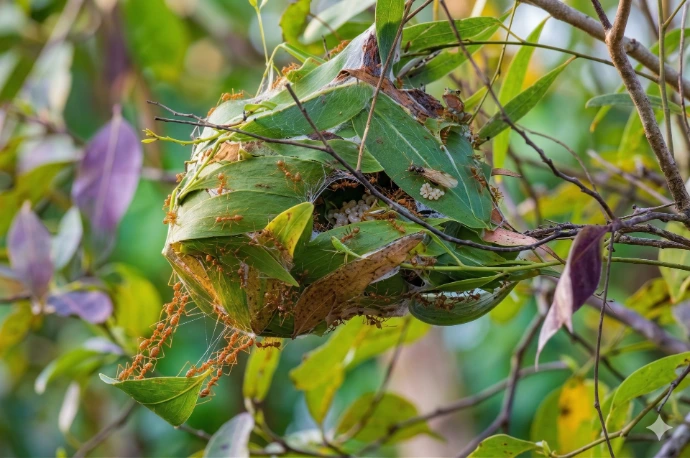
Four ways we build coexistence.
One end people and nature in balance. Four means, woven together in every landscape we enter.
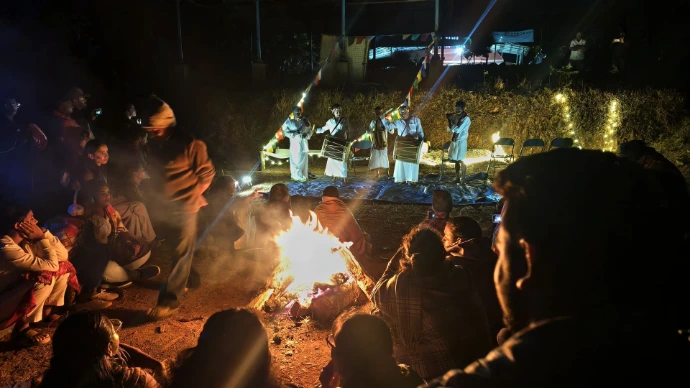
Community-designed conservation
Protecting wildlife and habitat with the people who live alongside them designing protection around the knowledge and lives already in the landscape, never by fencing nature off.
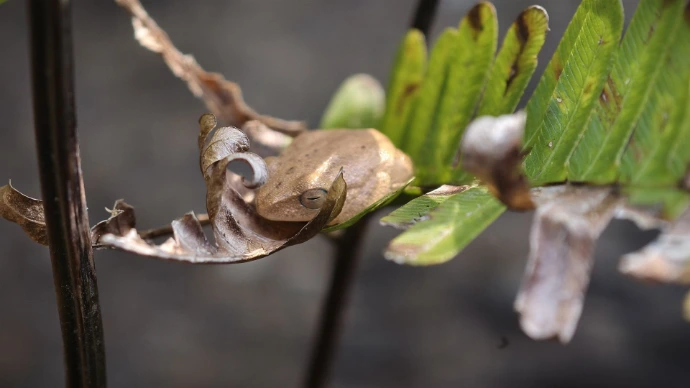
Ecological restoration
Bringing degraded land, forest and water back to health regenerating the corridors, canopy and watersheds that wildlife and communities both depend on.
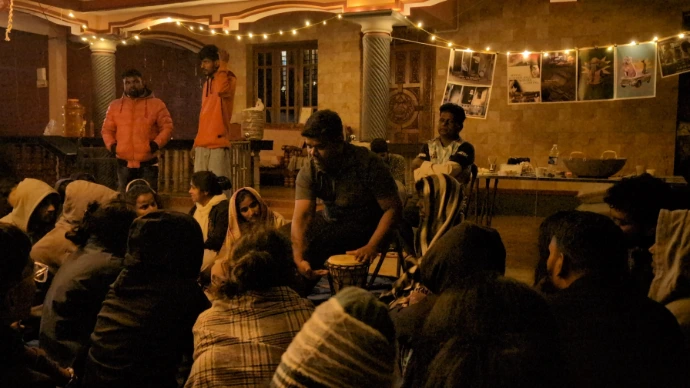
Climate education
Place-based ecological learning, participatory research and living archives so knowledge of the land is documented, and held by the community for the next generation.
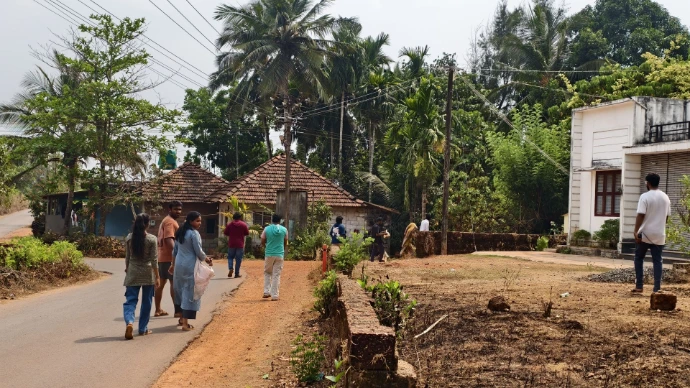
Resilient livelihoods
Regenerative agriculture, eco-livelihoods and local enterprise so that living in balance with the wild is economically possible, not a sacrifice asked of the poorest.
Enter the Landscape, not the map.
We begin where Interactions is already live a specific forest-edge landscape identified with local partners, chosen by where people and wildlife actually collide, never by a region drawn from outside.
Listen before we co-build.
We spend the early months sitting with community and the panchayat, mapping the real patterns of interactions and the knowledge already held in the place. The community sets the agenda; we bring no template.
Co-create what the land needs.
Together we build the systems the landscape calls for dialogue circles between communities and forest departments, protected movement corridors, restoration of degraded habitat, place-based learning, and regenerative livelihood models.
Sustain it transparently, and connect it.
Resources flow through Circula. Each landscape links into the wider programme so its learning, strengthen the next journey.
Place-based
Native
The elephant in this valley isn't the elephant in the next. We work landscape by landscape coexistence built anywhere general holds now here specific.
Community-deisgned
They set the agenda.
We don't arrive with a programme to deliver. The people who live with the wild hold the knowledge and the decisions; we hold space, time and tools.
Community-owned
Knowledge stays home.
Every archive is held by the community, never extracted to an outside database so the generation inherits it without anyone's permission.
The programmes, and what each one builds.
Flagship · regional programme
Voice of the Western Ghats
Our flagship programme for the Western Ghats - one region's expression of the wider mission.
It exists so the people who live in the Ghats, not institutions outside them, set the terms of how the landscape is protected. It carries conservation, restoration, learning and advocacy across the region, and grows local ecological leadership from the soil up.
"ನಾಡ ಮಕ್ಕಳಾ ನಾವು, ಕಾಡು ಮಕ್ಕಳು ನಾವು."
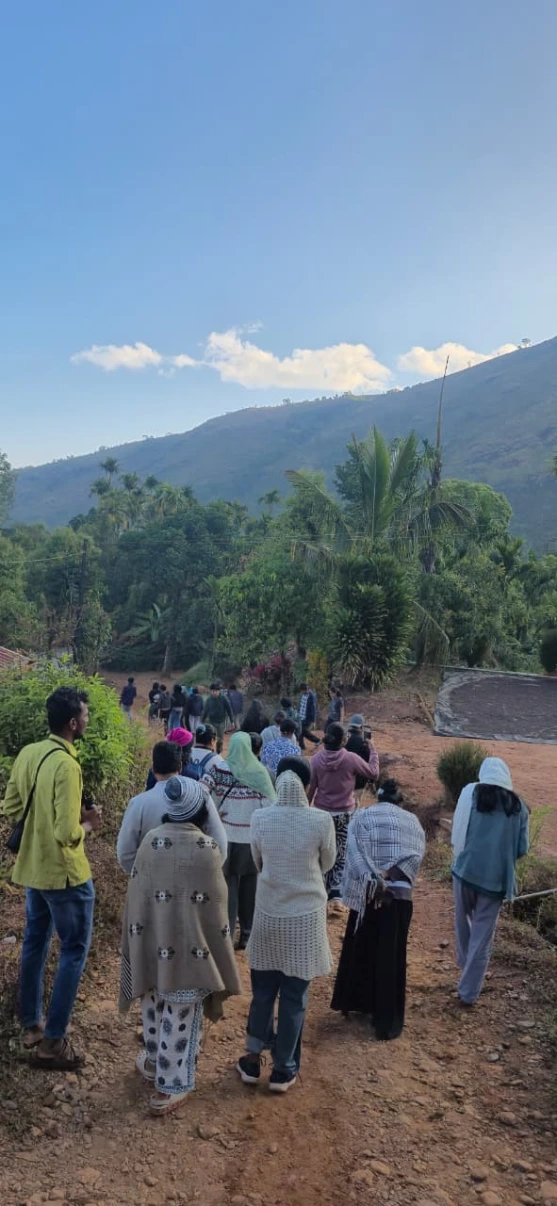
Co-existence Effort
Project P.E.A.C.E.
Coexistence infrastructure across human–elephant landscapes, built so encounters end in passage rather than loss.
- Standing dialogue circles between communities and the forest department
- Mapping and protecting elephant movement corridors
- Community early-warning and rapid-response practices
- Coexistence knowledge shared between neighboring villages
Connecting you with the perfect property through personalized guidance.
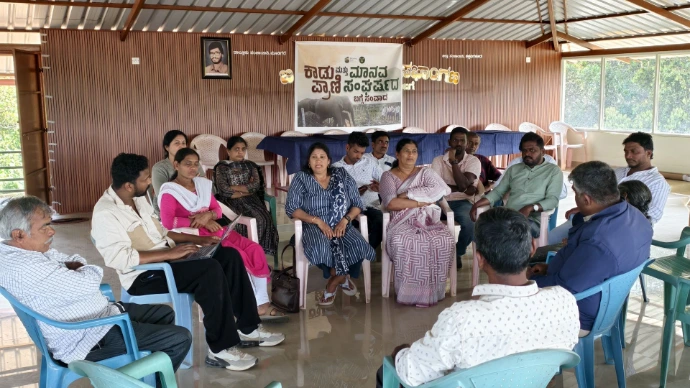
Non-Zero Learning Space
Place-based ecological education where the forest is the curriculum and the learning stays in the community that built it.
- A curriculum drawn from the local landscape.
- Documentation of local ecological knowledge, held by the community
- Youth ecological leadership grown in place
Connecting you with the perfect property through personalized guidance.
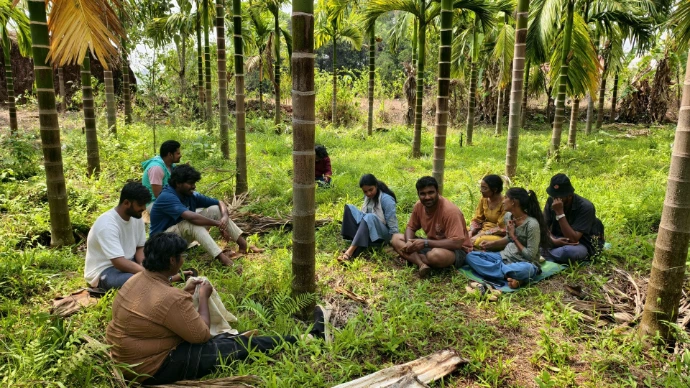
Place-based coexistence,
led and owned by the community.
We enable the space where communities build the infrastructure to hold their own
Who holds the work, and how we hold ourselves.
"We are children of the land. We are children of the forest."
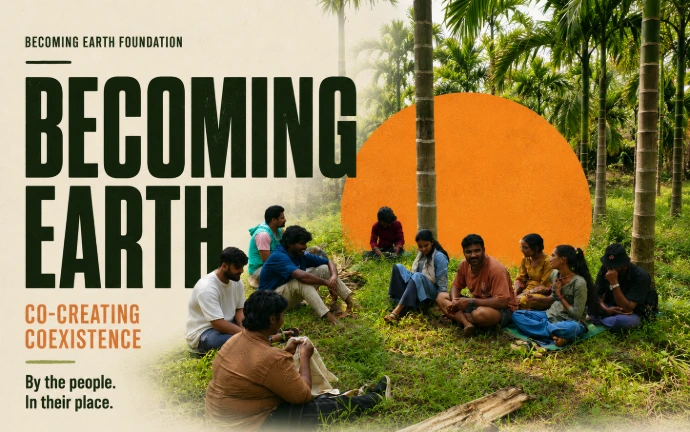
ಒಟ್ಟಿಗೆ
This work is sustained by people who believe communities should design conservation, not be managed by it.
The way we see ourselves is the way we see forests.
We practise inside what we ask outside.
We cannot build coexistence in the world without practising it in the team. Governance, care and decision-making inside the organisation follow the same collective, non-hierarchical model we bring to the field.